Project
Undergarden
Project Undergarden concerns a terminal facility on the estuary of the Changhua Industrial Zone: a factory on a mission to repair the polluted landscape, the human body, and our environmental sensitivity simultaneously.
There is a profound gap between two bodies — the human body and the land — each operating within its own circulatory system. Under the accelerating pace of industrial development, human labor has been meticulously subdivided, like small screws within a sophisticated machine. Scaled apart from the land, the human being has become alienated from it: we no longer know where our food and water originate, or where they go — until the environment returns them to us.
The human body and the land must therefore be understood as two bodies at different scales within the same circulation. The body's cycle is nested within the land's, and the interaction between them should be mutual, visible, and direct — rather than ambiguous and concealed.
Womb · Carcass · Amniotic
The architectural concept is structured around three interrelated spatial metaphors: the Womb — an enclosed, protected, generative interior; the Carcass — a structural skeleton exposed to the elements, productive through its very decay; and the Amniotic — the fluid medium that connects and sustains life within the system.
These three conditions do not describe discrete zones but overlapping states of spatial experience, each present at different moments in the project's fifteen-year lifecycle. The project is not a fixed form but a series of transformations — from enclosure toward openness, from cultivation toward ruin, from the human body toward the land.
Changhua Industrial Zone
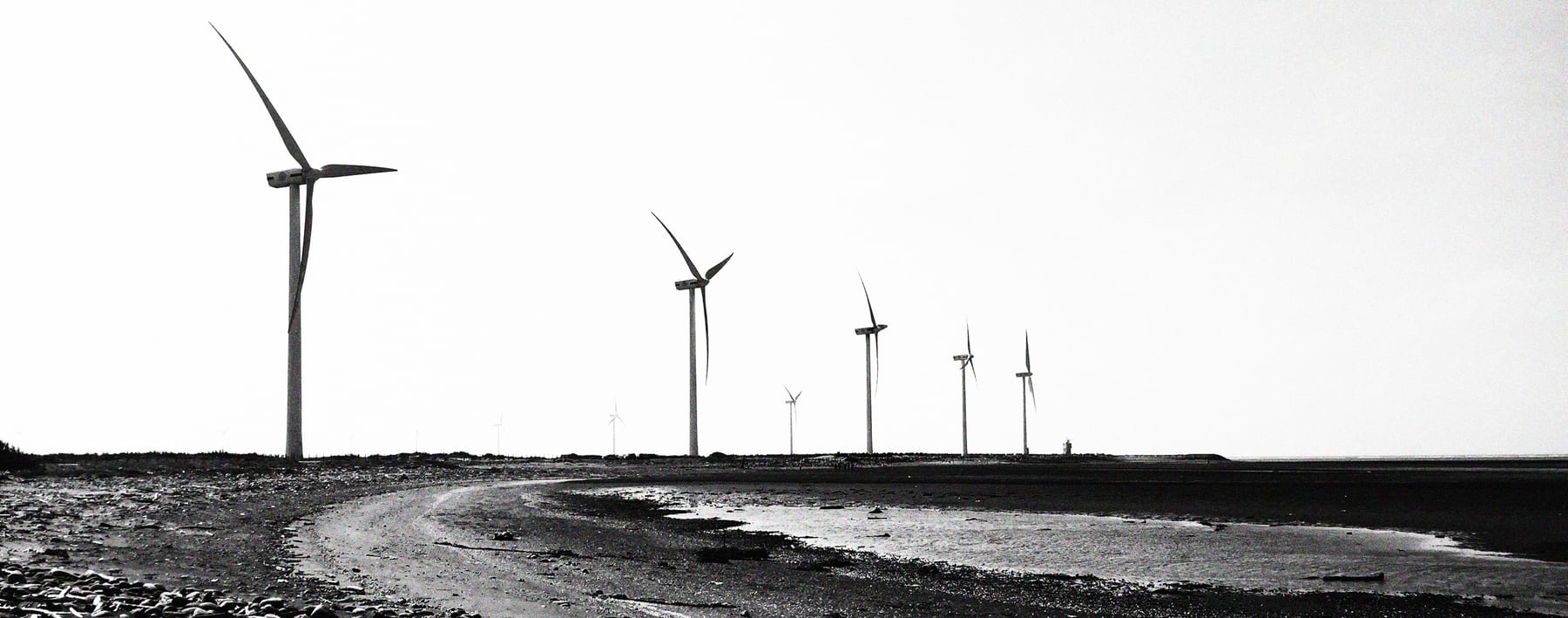
The site is the largest area of artificial reclaimed land in Taiwan: the Changhua Industrial Zone. An ill-conceived economic policy from the 1970s produced this gigantic surface, operating at only 32% land-use capacity. Like a boundary inserted into the original coastline, it generates a uniquely desolate atmosphere and has triggered ecological transformation — channeling wastewater from nearby factories and altering the migration patterns of wetland birds.
An unfinished road framework on the estuary was selected as the demonstrative site: a repair machine aimed at reducing environmental pollution and bolstering human health — a temporary Garden of Eden, operative across a cyclical 15-year period.
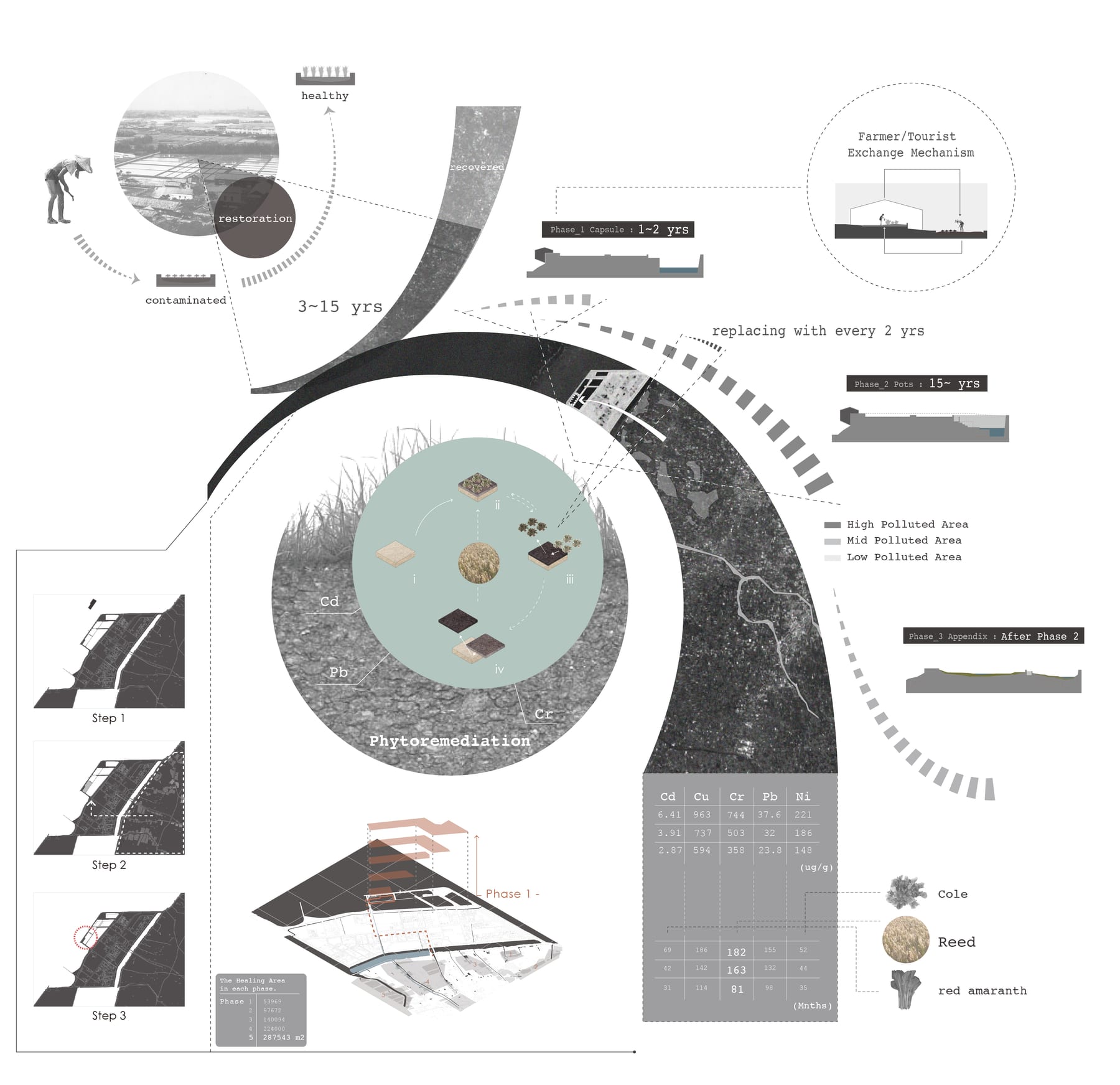
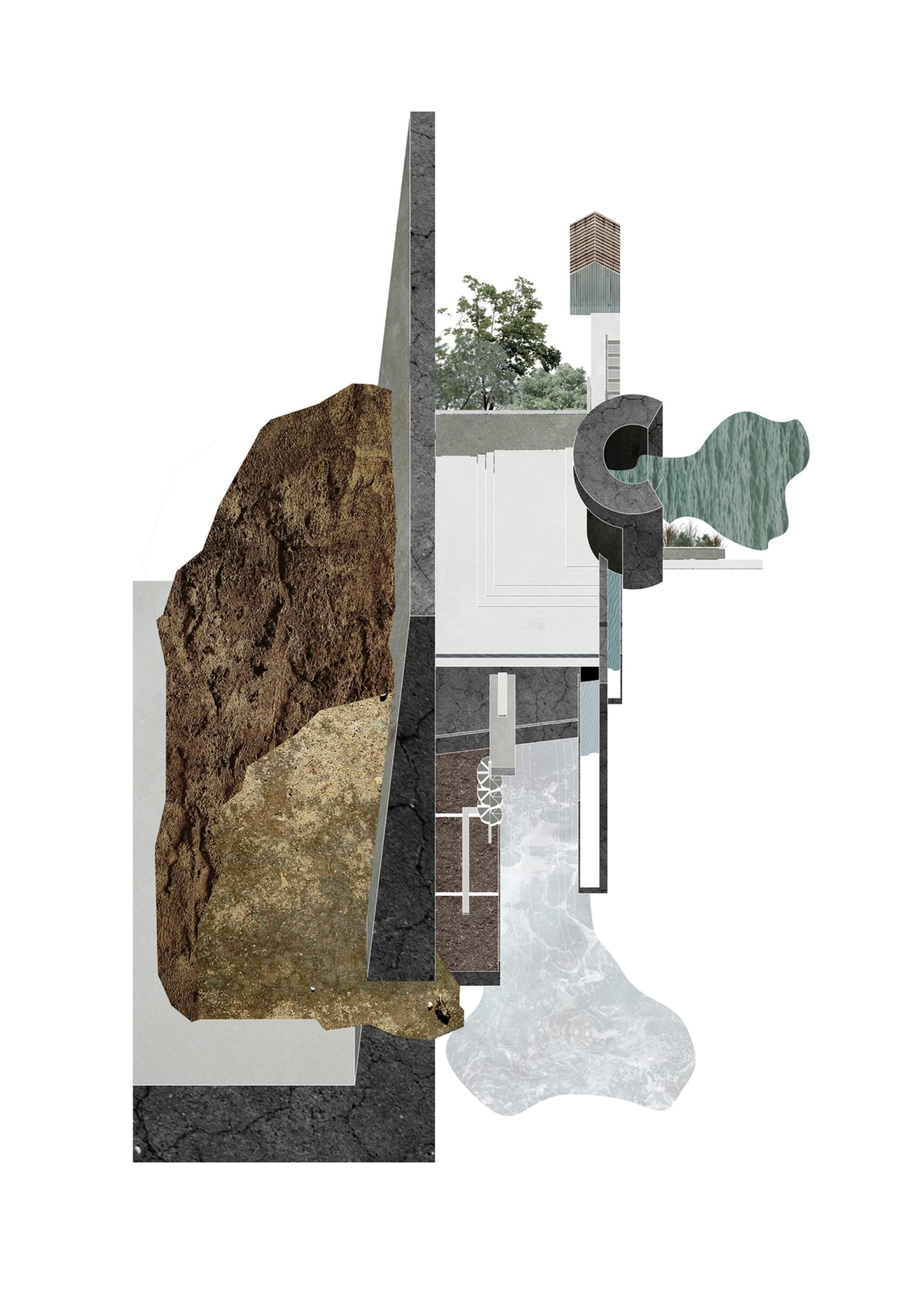
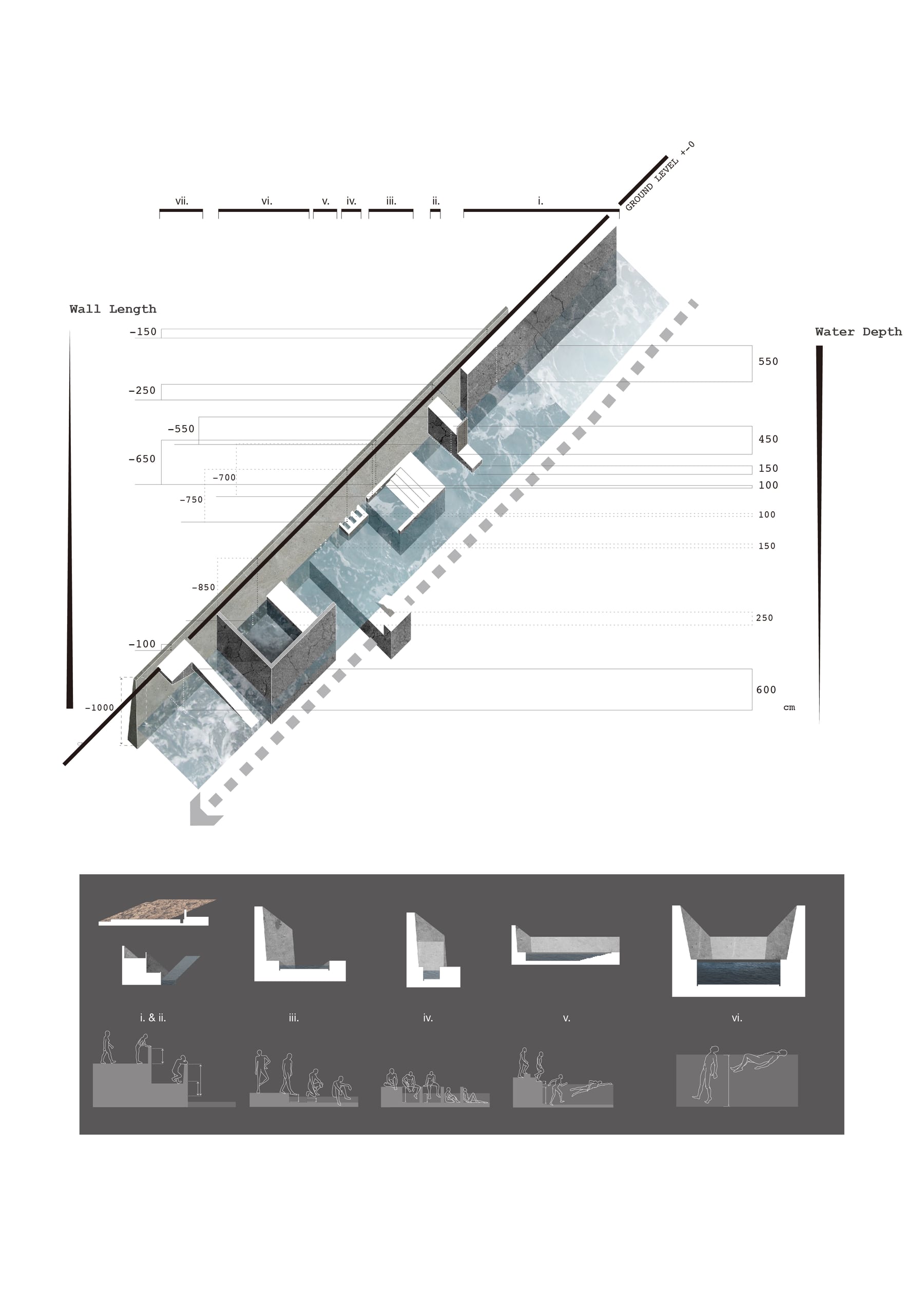

The Mechanism of Soil & Water Detoxing
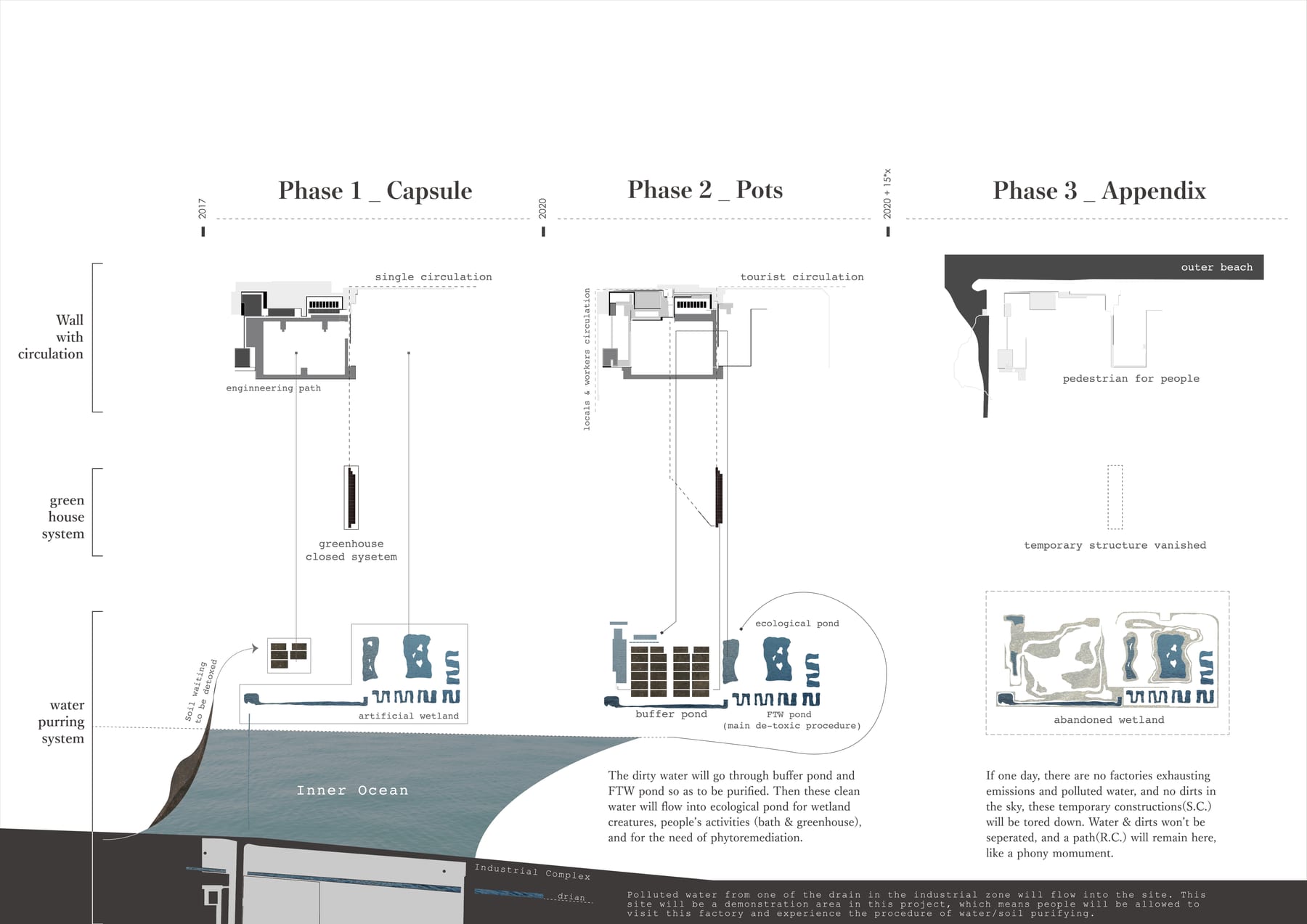
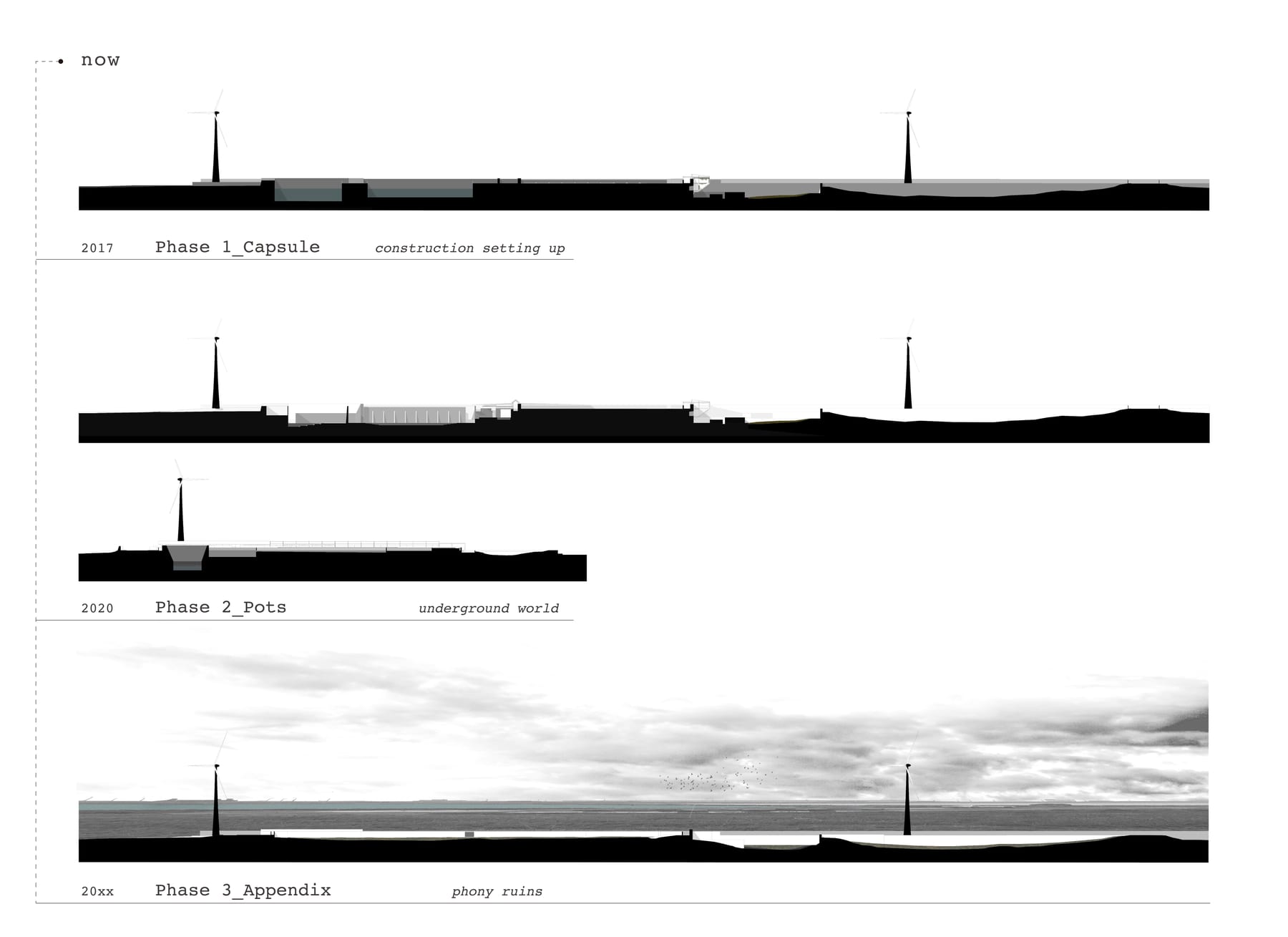
The design unfolds across three phases — Capsule, Pots, and Appendix — each addressing water and body purification through a distinct spatial attitude: from closure to openness, from cultivation to ruin. The mechanism is calibrated to the pollution cycle of the industrial zone; as each phase completes its work, the spatial character of the site transforms.
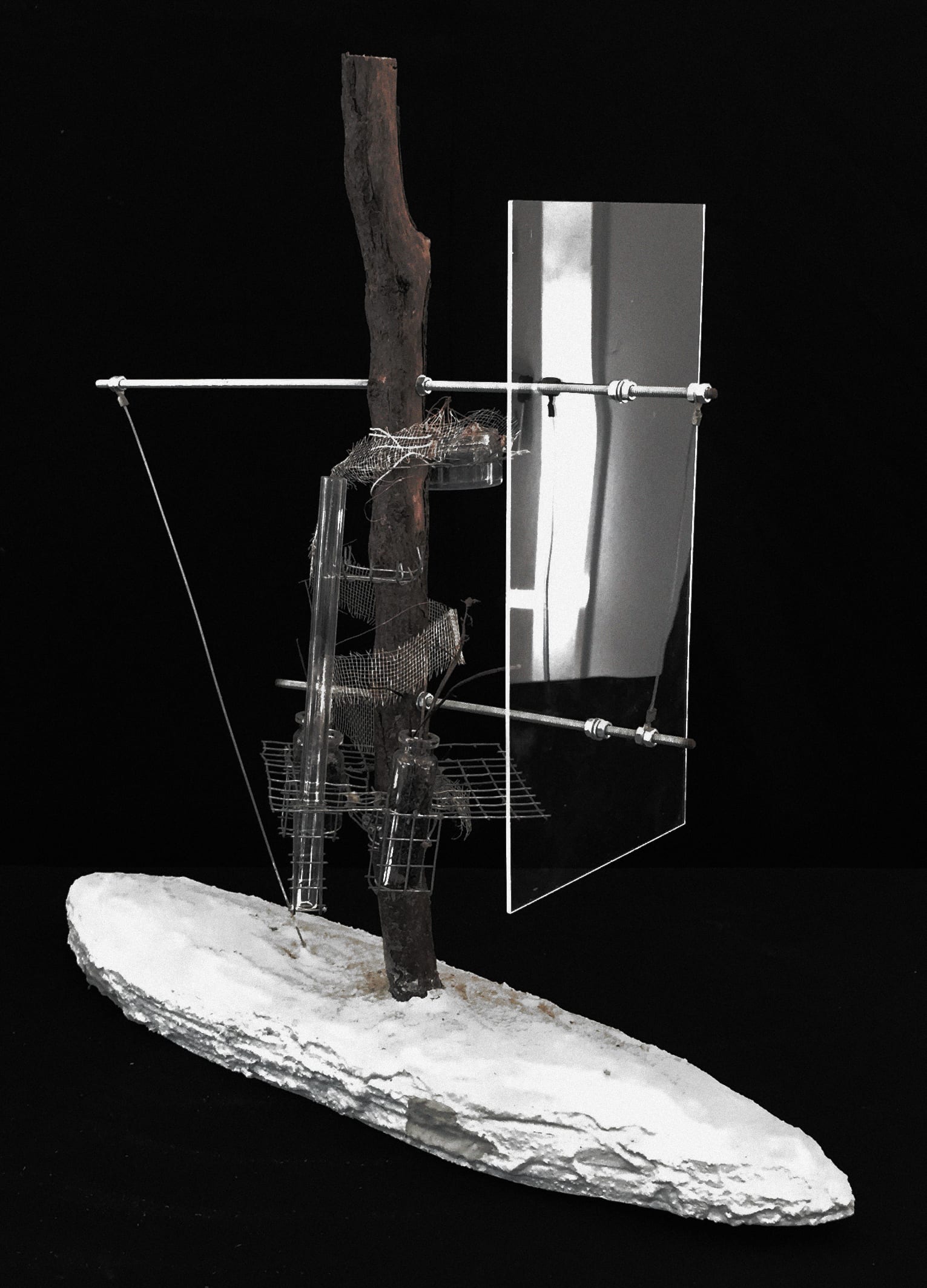
The Greenhouse & Suspended Trusses
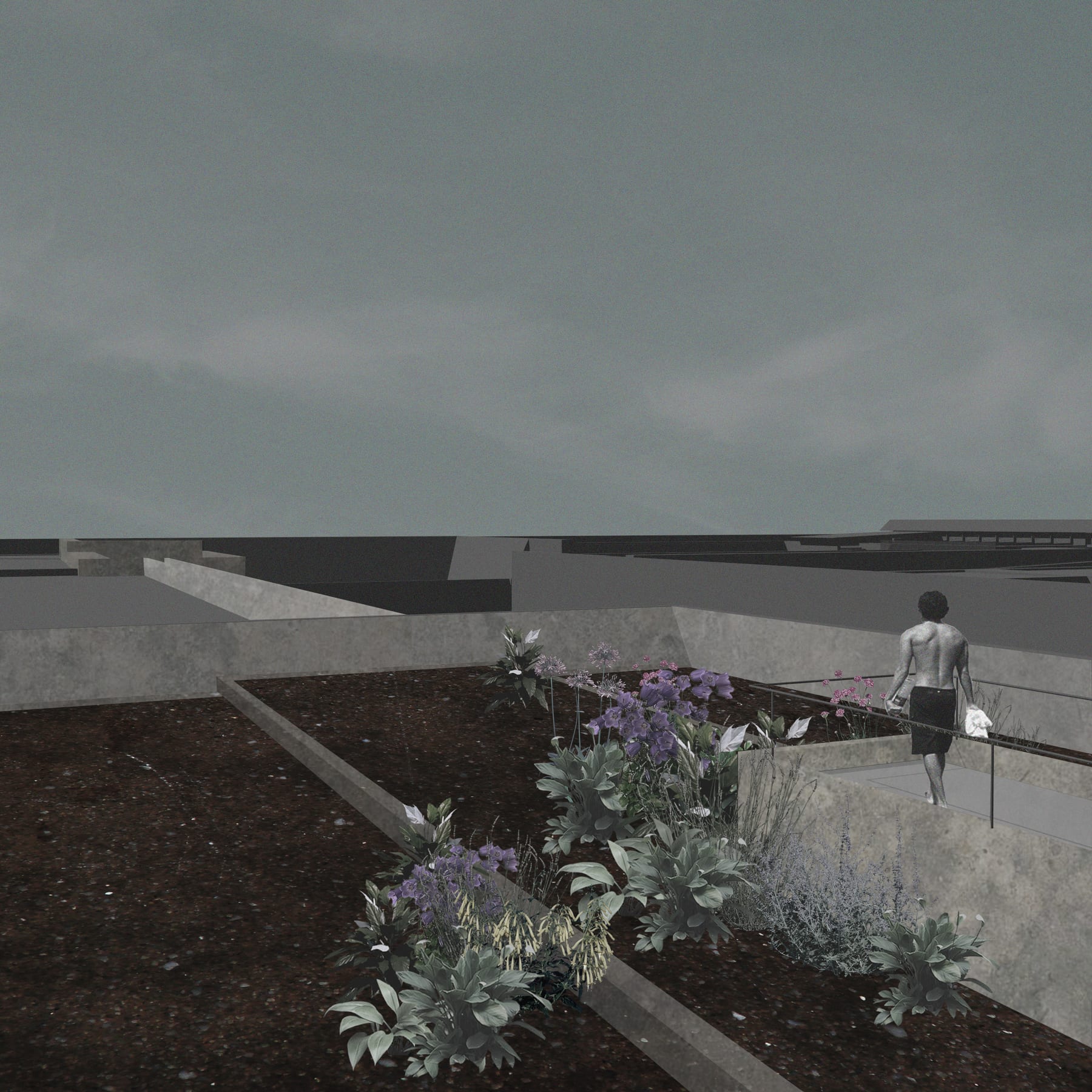
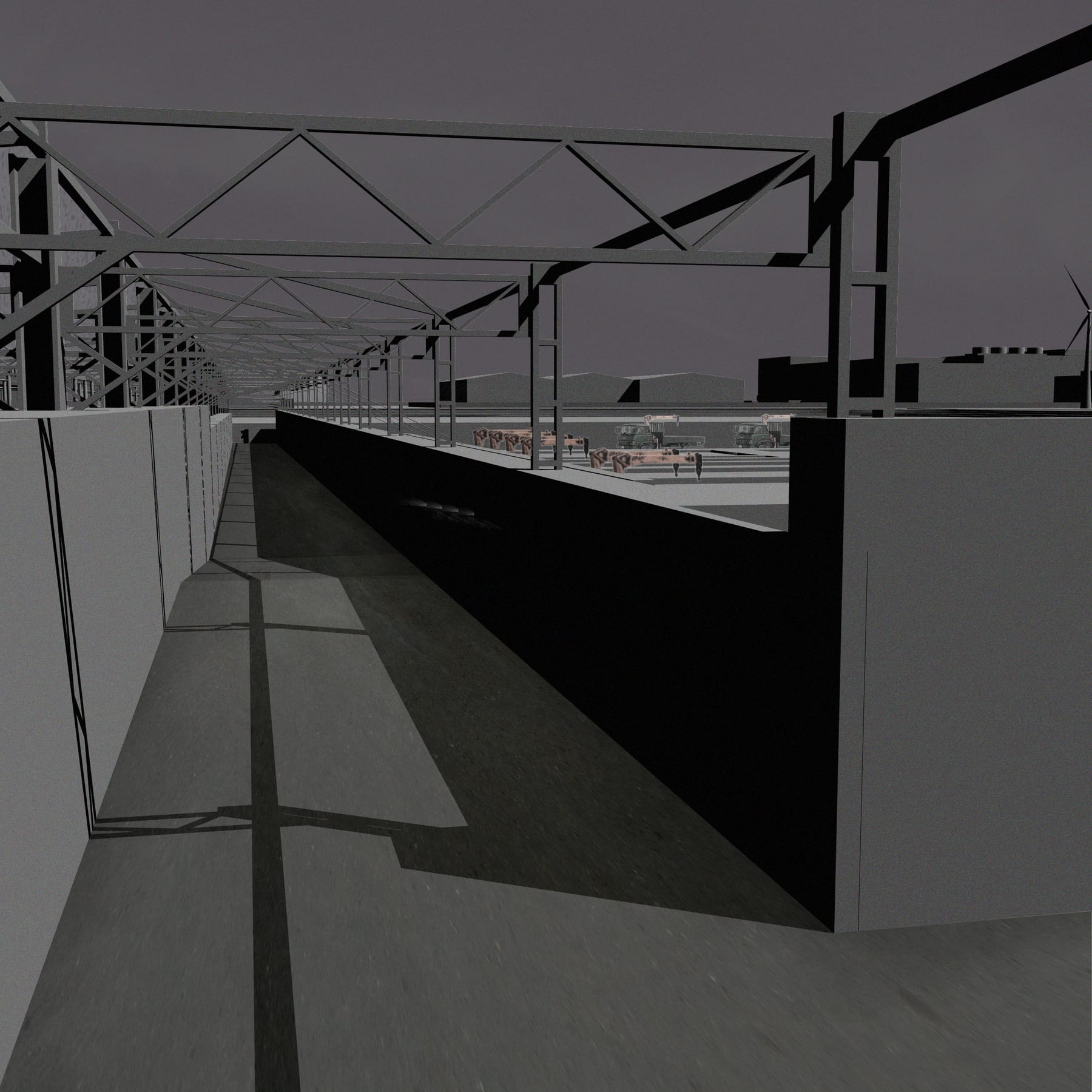
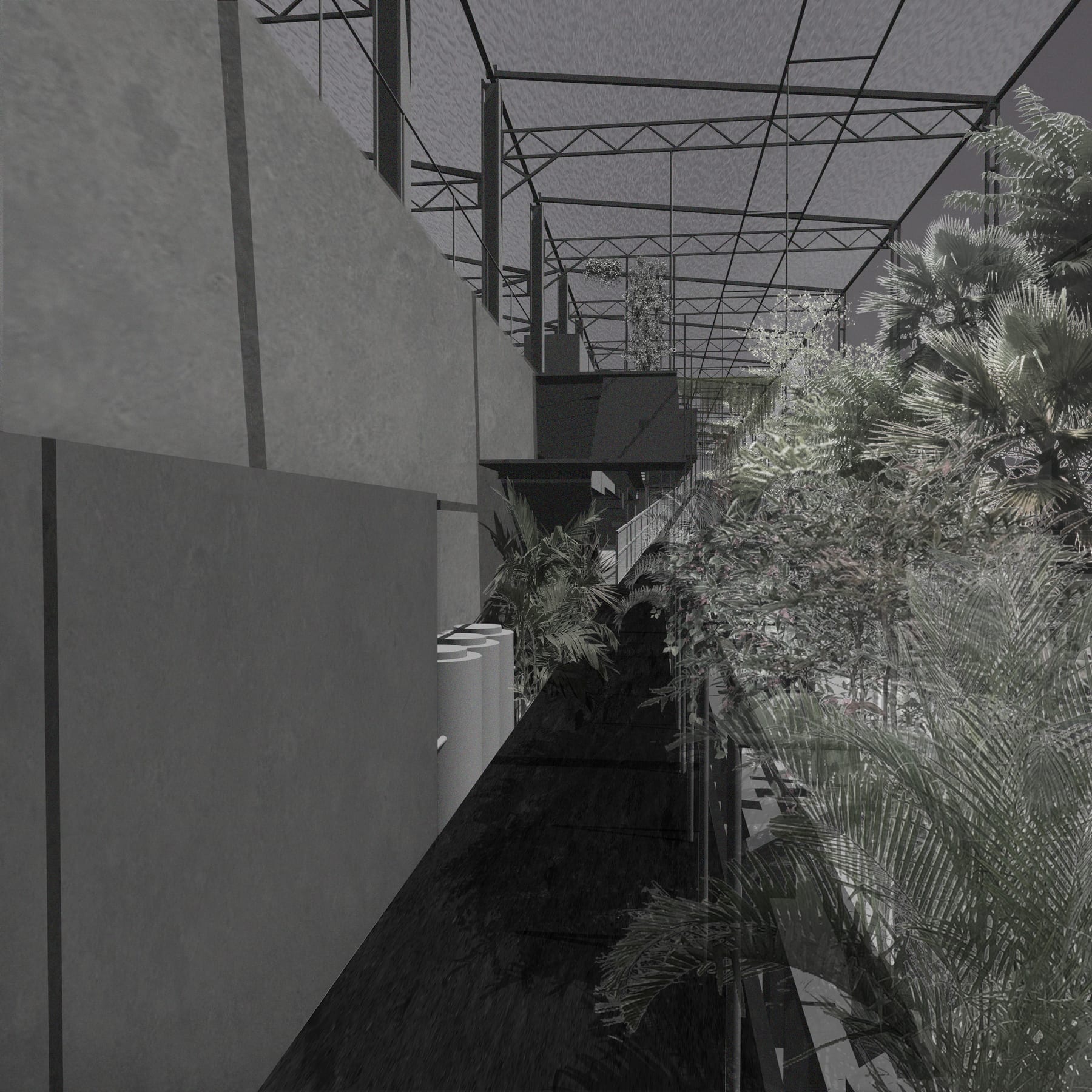
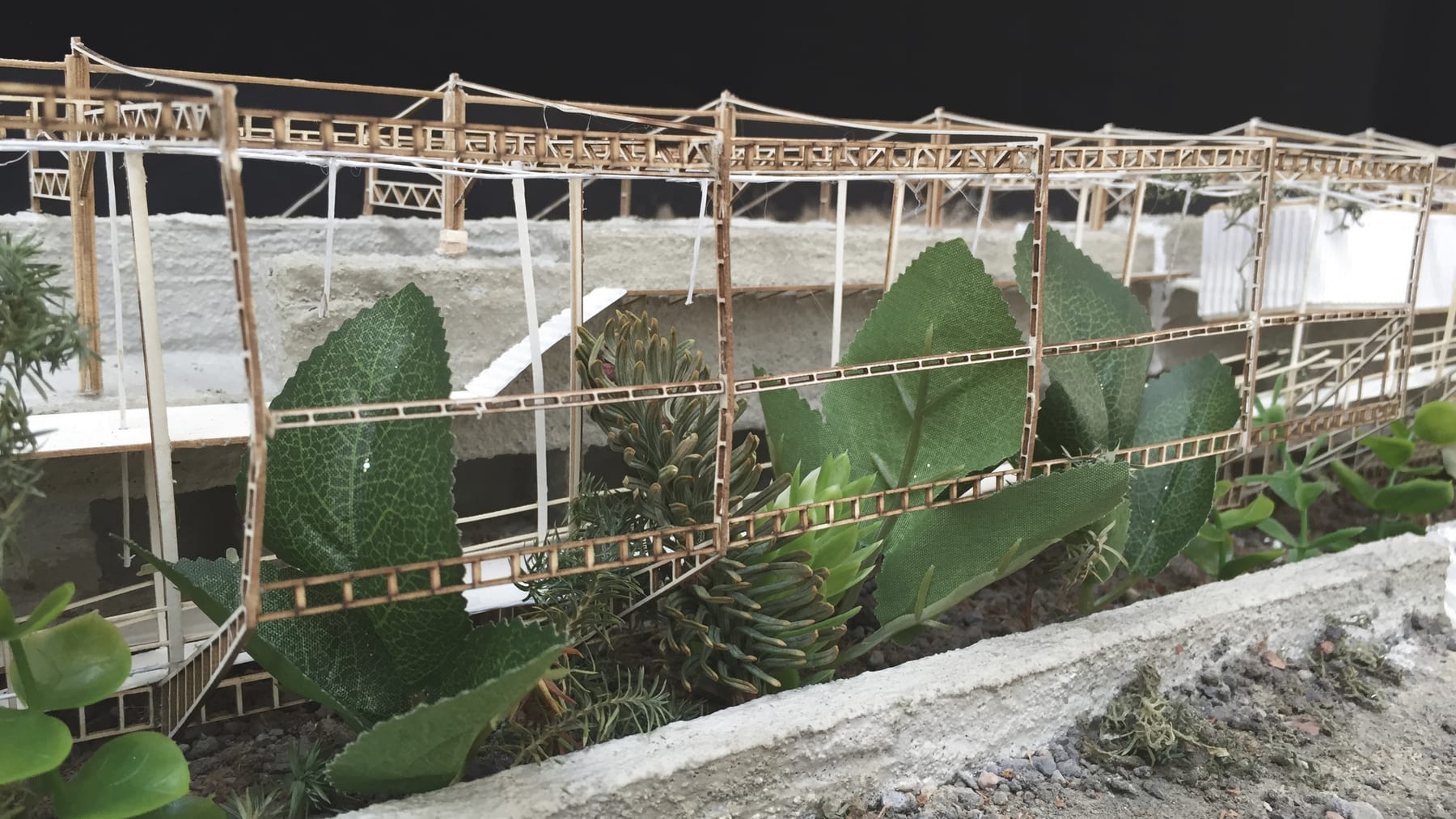
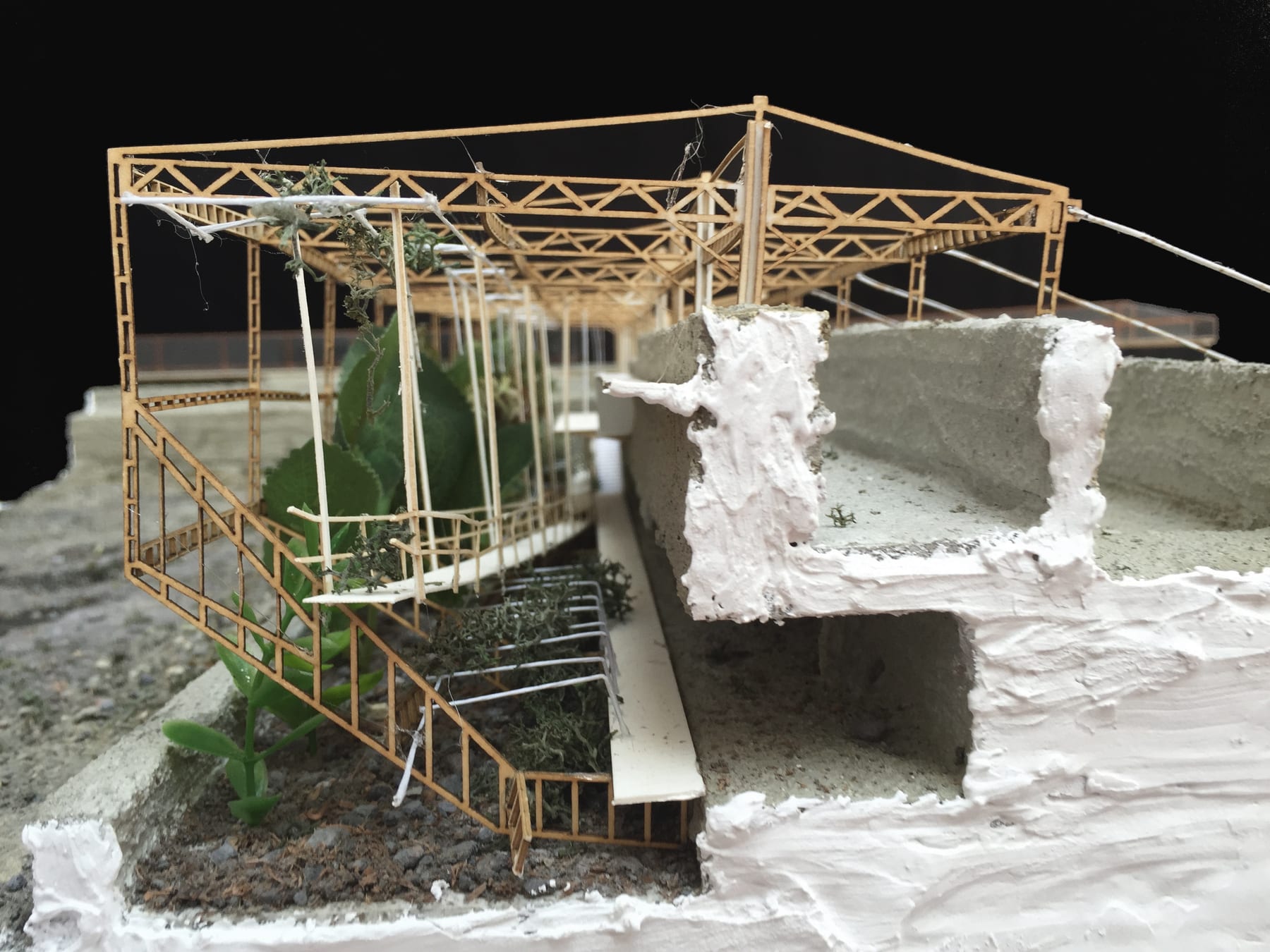
Infrastructure is constructed for detoxifying vegetation and artificial wetlands. Visitors enter the greenhouse — The Capsule — through a long ramp, watching excavators work at the edge of the concrete wall below. Inside, human sensitivity is engulfed by immense greenery. Against the griminess outside, visitors encounter fresh air and trees of varying heights; they stand before a vast screen, watching the transformation of the external landscape from within a closed system.
Suspended steel trusses of varying depth organize diverse human activities: vegetarian restaurants, plant nursery workshops, accommodation, and skywalks linking them together.

Containing Walls & the Water Sequence
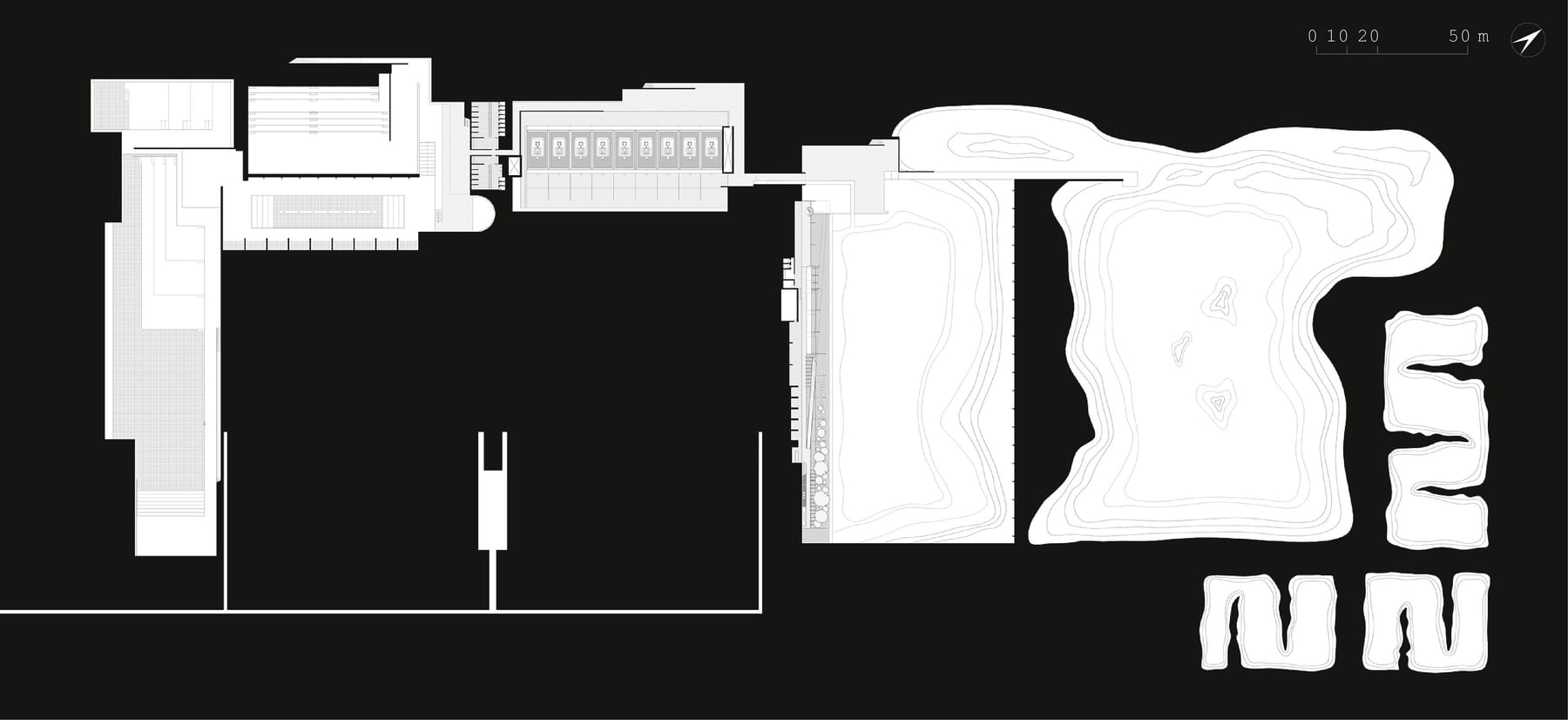
Once the infrastructure is complete, activity spills from The Capsule down to ground level. The containing walls reveal their dual purpose: engineering structures that also function as architecture — pots bearing soil, water, plants, and people.
The water-purification sequence structures the spatial experience. Visitors descend into an underground world through containing walls rising up to 150 centimeters above grade, moving from the observation of contaminated waste to direct contact with purified water.
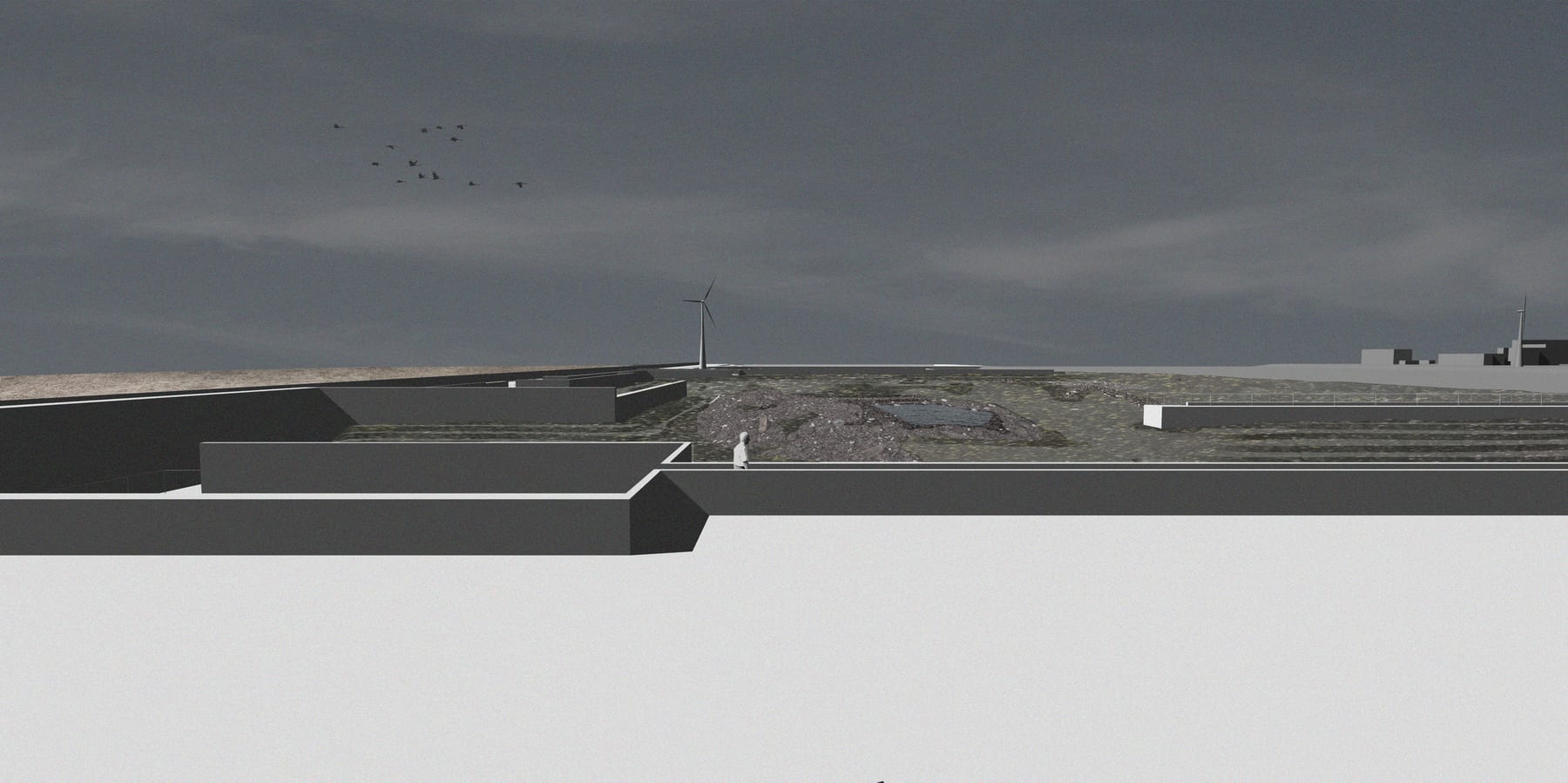
This underground world is composed of a series of cinematic scenarios — some solitary, some intensely social — unfolding from the lightest drain to the deepest pond. Here, the drifting fumes and dust of the industrial area are absent: only sky framed by walls, water, and the swinging shadows of windmills.
Speculative Future & the Vestigial Monument
This is a speculative future: if nearby factories cease discharging wastewater and the dust dissipates, this facility would become a vestigial monument — an appendix without function. Soil and water would refill the unfinished road framework; the containing walls would no longer divide them. Only a path would remain for visitors drifting along the edge of rehabilitated wetland, watching migratory birds return to this forgotten paradise.